Insights from the Princeton Symposium on Biological & Artificial Intelligence
Exploring Dr. Dani S. Bassett's 'Ways of Knowing' and the Correlation Between AI and Neuroscience.
I attended this symposium on October 19th, 2023, at Princeton University because I was intrigued by the correlation between AI and Neuroscience, and of course the campus of Princeton University. I attended a Keynote by Dr. Dani S. Bassett on the topic “Ways of Knowing” which was quite interesting. In their talk, they talked about the three different ways in which humans can ‘know’ information.
They basically studied a person’s tendency to act towards a particular stimulus in a certain way.
They gave subject a set of different stimulus and noted their reactions towards these different stimulus.
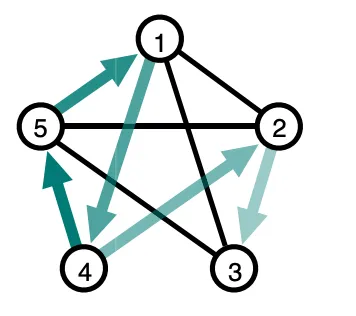
Above image represents a single cluster of stimulus, which basically is a set of stimuli which are inter-related to each other. The subjects were tested on different such clusters and their response to transition and their tendency to transition between either a single cluster or multiple clusters was recorded.
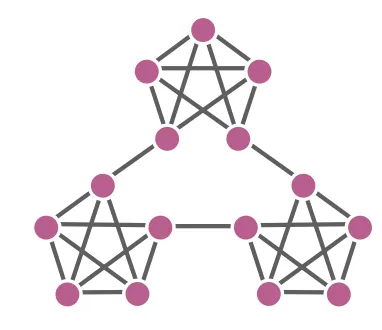
The readings were then represented as such graphs in which the vertices represent a stimulus, and the edges represent a subject’s tendency to transition in between two stimulus. These stimulus are also separated into different clusters as shown above.
Dr. Dani further explained the following image.
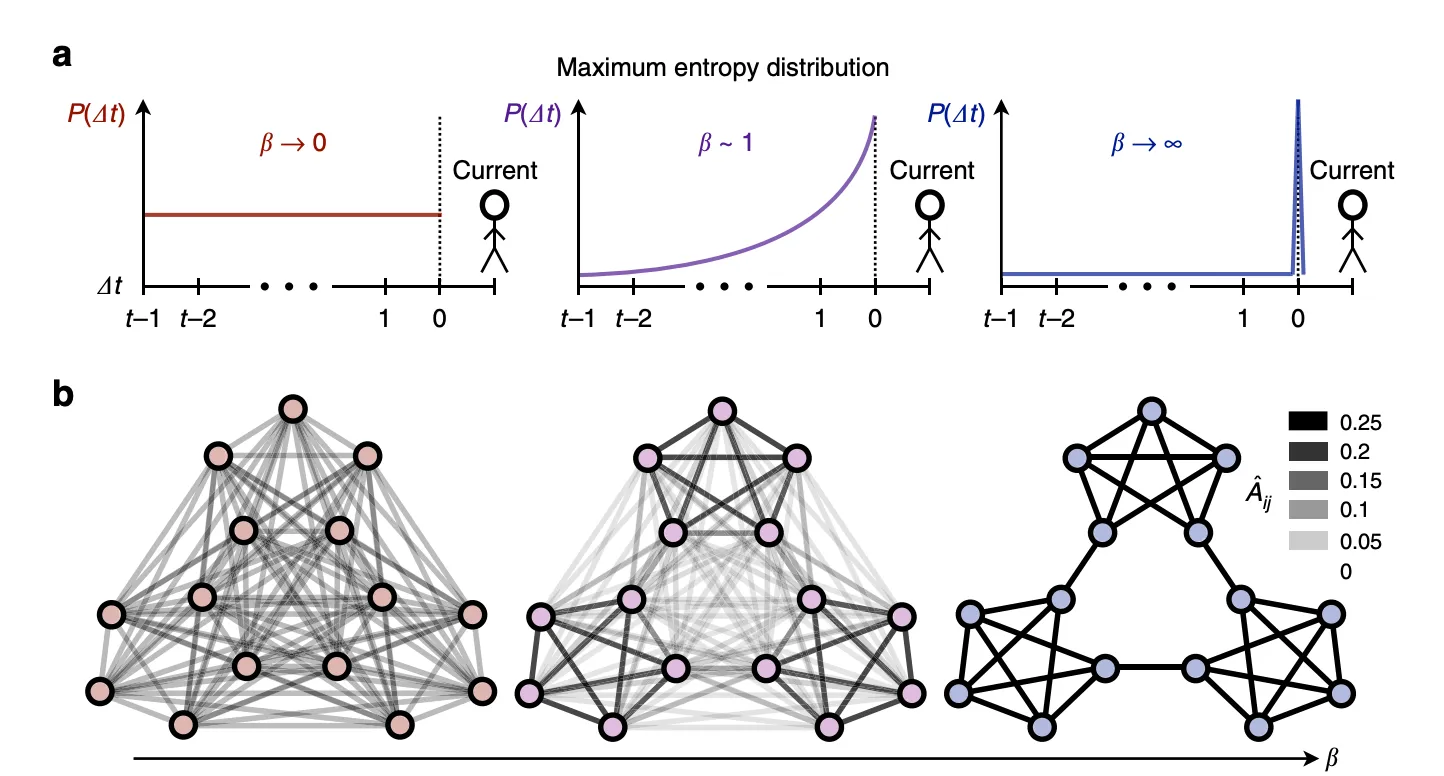
They went on to say that a subject can react to a set of stimulus in three different ways, depending on the level of previous information that they have, and a lot more factors.
Part (a) of the above figure represents the ability of a subject ‘remember’ information. It is a graph between t(time) and P (𝜟t) represents probability of a person remembering the information or the stimulus at that particular moment in time.
The first image in the figure shows that β → 0, which means that the ability to remember is zero, and no previous knowledge is retained. Which means that the previous stimulus, and previous information is not remembered at all. The corresponding graph in part (b) of the above image shows that this would lead to all the edges stimulus graph being light coloured which means that the person is equally likely to respond to one stimulus in a certain way as they are to respond to a different stimulus in a different cluster.
The third image, being completely opposite, shows that β → ♾️ which means the subject remembers everything that has ever happened, and has knowledge of all the previous stimulus. In this case, the edges in the corresponding graph are all dark coloured, which indicates that the tendency to transfer thought to a different set of cluster is likely but only when they ‘know’ that they have to transfer to that other set of stimulus.
The second image indicates how we humans react to a specific set of stimulus. The (a) graph shows that for us, β ~ 1 which means that we have the previous knowledge and we do ‘remember’ the older information, but as the information grows older, we tend to forget it. So, the corresponding stimulus graph shows that we tend to stay in the same cluster of stimulus as long as possible but we also do shift to a new cluster sometimes.
Note: The above text is my interpretation of the talk by the author and their research paper. The images above are from the same research paper.
I look forward to the exciting discussions, collaborations, and discoveries that await us. Stay tuned for more insightful content, and let's embark on this journey together!